
Are Year-Round Plant Health Care Programs for Your Trees Worth It?
Beautiful estates don’t maintain themselves. Year-round plant health care brings ongoing attention and fewer last-minute surprises for Eastside properties.
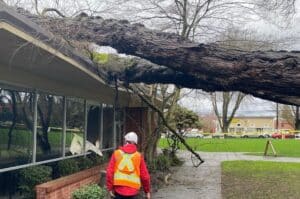
When the wind tore through western Washington, it revealed exactly which trees were prepared – and which weren’t. While some Eastside homeowners watched the storm pass with nothing more than a few scattered branches, others faced crushed fences, blocked driveways, and emergency removal bills that made their eyes water. The difference wasn’t luck. It was whether anyone had looked at those trees before the wind blew in.
If you’d been putting off tree maintenance, that storm was likely your wake-up call. The good news? A year-round plant health care program can help you avoid those emergency costs – and give you peace of mind the next time the wind picks up.
Key Takeaways
- Plant Health Care (PHC) is a proactive, science-based approach to maintaining trees, shrubs, and ornamental plantings – not just treating problems after they appear.
- PHC programs include regular inspections, soil management, pest monitoring, disease prevention, and targeted treatments timed to each plant’s needs.
- Homeowners with PHC programs typically spend less on tree care overall because problems are caught early, when solutions are simpler and more affordable.
- Annual inspections by a Certified Arborist form the foundation of any effective PHC program.
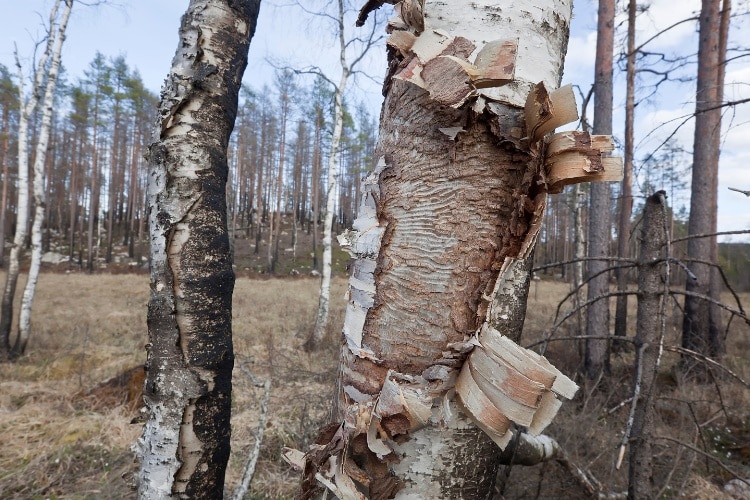
Bronze birch borer damage revealed beneath the bark. Caught early, infestations like this can often be treated — wait too long, and removal becomes the only option.
What Is Plant Health Care?
Plant Health Care (PHC) is a comprehensive, proactive approach to maintaining the health of trees, shrubs, and ornamental plantings on your property. Rather than waiting for visible problems or emergencies, PHC focuses on prevention, early detection, and targeted intervention.
The concept builds on Integrated Pest Management (IPM), which prioritizes understanding plant biology over blanket chemical applications. But where IPM focuses primarily on pests, PHC addresses the full picture. In other words, PHC looks at everything your trees and plants need to stay healthy, such as:
- Soil health and nutrition
- Pest and disease monitoring
- Structural integrity
- Environmental stressors like drought or compaction
A well-designed PHC program treats your landscape as a living system, with your arborist adjusting the plan as conditions change.
How Does PHC Differ from Reactive Tree Care?
PHC catches problems early, while reactive care waits until something goes wrong. That timing difference affects both your options and your costs.
Reactive care responds to crises, including when:
- A large branch falls
- Leaves turn yellow
- An inspector flags a hazard
- A storm reveals structural weakness
By that point, solutions are often limited and expensive.
PHC, however, builds resilience before problems escalate, like:
- Your arborist spots signs of pests before the tree declines
- Soil compaction gets addressed before root systems suffer
- Structural weaknesses are identified before windstorms exploit them
The financial impact of that timing difference is significant. Emergency tree work typically costs 50–100% more than scheduled services. But the real savings come from avoiding emergencies altogether – and preserving trees that would otherwise need replacement.

Tree crew members review their findings with a homeowner during an on-site consultation — professional assessments catch problems that aren’t visible from the ground.
What Services Are Included in a PHC Program?
A comprehensive PHC program includes four core services: regular arborist inspections, soil management, pest monitoring, and disease prevention – each timed to your landscape’s seasonal needs.
Annual Arborist Inspections
Annual inspections – typically scheduled in late winter or early spring – form the backbone of any PHC program. A Certified Arborist walks your property, assesses each tree’s health, and identifies concerns before they escalate.
During an inspection, your arborist examines:
- Root zones for compaction or fungal activity
- Trunks for cracks, decay, or pest damage
- Canopy density and leaf color
- Early signs of disease or pest pressure
- Winter damage that needs attention before the growing season
The inspection results become the roadmap for everything else in your PHC plan.
PRO TIP: Schedule your annual tree inspection in early spring – it’s the best time to catch winter damage before the growing season and plan any necessary work at non-emergency rates.
Soil Testing and Fertilization
Healthy trees start with healthy soil. Urban and suburban landscapes often have compacted, nutrient-depleted soils that stress trees over time.
Typically scheduled in spring to support new growth and fall to support root development, PHC soil care includes:
- Testing to identify deficiencies
- Organic amendments to improve soil structure
- Targeted fertilization based on species and conditions
- Compaction relief through vertical mulching or air spading
Once soil health is addressed, targeted fertilization corrects any remaining nutrient deficiencies. Proper fertilization isn’t about generic plant food – it’s about understanding what your specific trees need and applying the right nutrients at the right time.
Pest Monitoring and Targeted Treatment
PHC programs monitor for destructive pests throughout the growing season – with monitoring intensifying during summer when insect populations peak – and treat only when numbers warrant intervention.
Common Pacific Northwest tree pests include:
- Bronze birch borer
- Aphids and scale insects
- Spotted lanternfly (emerging threat)
- Various boring beetles
Basing treatments on monitoring rather than a fixed schedule reduces chemical use, protects beneficial insects, and is often more effective because applications align with pest life cycles.
Disease Prevention and Early Intervention
Fungal diseases thrive in our wet climate. PHC programs include preventive applications in early spring for susceptible species and early intervention when disease appears.
Common regional tree diseases include:
- Anthracnose
- Apple scab
- Needle blight on conifers
- Bacterial canker
Timing is very important here – a fungicide applied before infection protects the tree, while the same product applied after symptoms appear may do little good.
Who Benefits Most from a Plant Health Care Program?
PHC programs deliver the most value for properties with significant tree investments or complex landscapes, but they’re also a smart choice for any homeowner who wants healthier trees and fewer surprises.
Properties with Multiple Trees
If you have a dozen or more trees, tracking each one’s health becomes impractical without a systematic approach. PHC creates a documented inventory and monitoring schedule.
Mature or Heritage Trees
Large, established trees represent decades of growth that can’t be quickly replaced. A mature oak or Douglas fir adds significant property value – losing one is a substantial financial and aesthetic loss.
Challenging Environments
Waterfront lots, steep slopes, and heavily shaded areas create unique stressors. PHC programs are customized to account for site-specific factors like salt spray, wind exposure, or competition for light.
What Are the Hidden Costs of Skipping Year-Round Plant Health Care?
Skipping proactive tree care often leads to emergency situations where your options are limited and expenses multiply quickly.
The direct costs of reactive care add up fast:
- Emergency removal of a storm-damaged large tree that costs roughly 50-100% more than scheduled work
- Permit fees and in-lieu payments varying by municipality; ex: potentially $1,300+ per tree in Bellevue
- Replacement plantings plus decades of waiting for maturity
Beyond the immediate costs, some losses simply can’t be recovered. A mature tree that took 50 years to grow can’t be replaced with money – only time. And problems left untreated often spread, turning one affected tree into several.
How Does Tree Care Affect Eastside Property Values?
Proactive tree care protects property values by preserving mature trees that contribute directly to what your home is worth. Eastside property values have seen sustained growth – roughly 20% in 2023 followed by nearly 10% in 2024 – outpacing the rest of King County.
That appreciation makes tree loss even more consequential. A single mature tree’s removal can reduce property value by 3–15%. For estate owners managing multi-million-dollar properties, that translates to a significant financial hit — one that takes decades to recover as replacement plantings mature.
Research consistently shows that proactive property maintenance outperforms reactive approaches, reducing long-term costs while preserving the landscape investments that contribute to home values.
Frequently Asked Questions About Year-Round Plant Health Care in Seattle
What’s the difference between PHC and regular tree maintenance?
Regular maintenance addresses structure and appearance with services like pruning, removal, and debris cleanup. PHC focuses on biology: soil health, nutrition, pest management, and overall vitality.
How do I know if my trees are healthy?
Healthy trees have full canopies with consistent leaf color, no visible trunk damage or decay, and stable root systems. A Certified Arborist can identify early warning signs that aren’t obvious to untrained eyes – problems like internal decay, root damage, or pest infestations that may not show visible symptoms until the tree is in serious decline.
Can mature trees benefit from PHC programs?
Mature trees often benefit most from PHC programs. Large established trees often need monitoring most because they’ve had more time to develop structural issues, accumulate pest pressure, or experience root zone compaction. A health program helps extend their lifespan and maintain their value.
How long does it take to see results from a tree health program?
Some improvements appear within weeks (pest control, disease treatment). Others take a full growing season or longer (soil recovery, nutrient correction). Most property owners notice meaningful improvement in canopy health within 12–18 months.
Does PHC reduce my risk of storm damage?
Yes. Regular assessments identify structural weaknesses before storms exploit them. Proper care produces healthier root systems and stronger trees that better withstand severe weather.

Measuring trunk diameter to determine permit requirements — Eastside municipalities require permits for trees as small as 6 inches in diameter.
Healthy Trees Start with Year-Round PHC from Seattle Tree Care
The recent windstorm caught thousands of Eastside homeowners off guard. The next major storm will likely do the same — unless you’ve already addressed the weak points in your trees.
A year-round tree health approach costs less than emergency calls, protects your property value, and keeps your options open when problems do arise. You’ll also gain something harder to quantify: the confidence that comes from knowing your trees are ready for whatever the weather brings.
Give the experts at Seattle Tree Care a call at 206-222-0687 or request an estimate online for a tree inspection today. We’ll assess your trees, identify any concerns, and help you build a plan that fits your property.


SEE MORE ARTICLES FROM OUR b(LOG)
We've got you covered with tips, resources, updates, how-to's, and other helpful information about trees and landscapes in Seattle, Puget Sound, and King County, WA. Join the thousands of smart local residents who get the monthly newsletter from Seattle Tree Care for helpful information you won't want to miss!
There's no spam - we promise! We are committed to keeping your e-mail address confidential. We do not sell, rent, or lease our contact data or lists to third parties.


