
Why Is My Douglas Fir Turning Brown and Dropping Needles?
Seeing needle drop on your Douglas fir in Sammamish or Issaquah? Learn what’s normal, signs of needle cast or stress, and when it’s time to call an arborist.
You notice brown needles collecting beneath your Douglas fir or a canopy that suddenly looks thinner than you remember. For homeowners in Sammamish and Issaquah, the tricky part isn’t noticing the change. It’s figuring out what’s wrong with your tree.
Douglas fir needle loss can have several explanations, from the natural aging of older foliage to needle cast disease, drought stress, or problems affecting the roots. The pattern provides some of the best clues. Here’s what to look for on the needles and across the canopy to determine whether your tree is going through a normal change or needs a closer look.
Key Takeaways
- Some loss of older, interior Douglas-fir needles in late summer and fall can be normal when newer foliage remains healthy, while unusual thinning, discoloration, or branch-tip loss deserves a closer look.
- Rows of pinpoint black fruiting bodies along the underside of older needles are a strong clue for Swiss needle cast, while Rhabdocline typically produces spots on current-year needles beginning in fall.
- Drought and root problems, such as Phytophthora, can also cause thinning and discoloration, and visual symptoms alone may not always distinguish root disease from needle cast.
- Confirming which needle cast disease is present can require close examination and, in some cases, magnification, which is why a Certified Arborist’s assessment gives a more reliable answer than self-diagnosis.

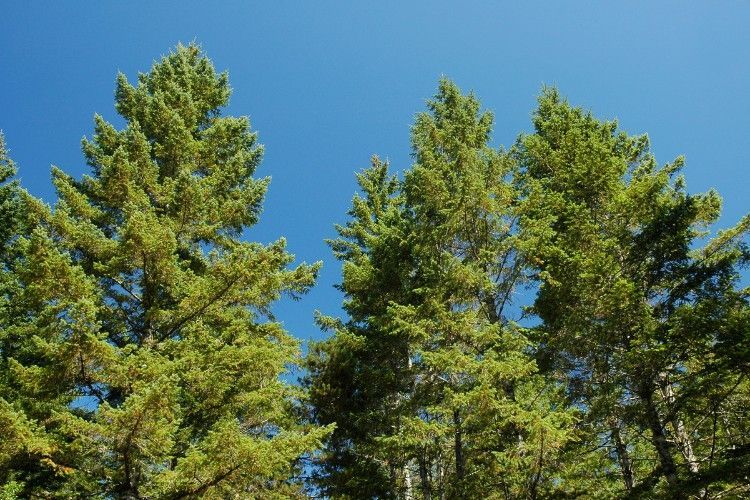
Healthy Douglas fir foliage and its distinctive cones can help homeowners identify the tree before evaluating changes in needle color or loss.
Is It Normal for a Douglas Fir to Drop Needles in the Fall?
Some loss of older, interior Douglas-fir needles in late summer and fall can be normal, particularly when the newest foliage remains healthy and green. Douglas fir retains its needles for multiple years, and older foliage eventually yellows, browns, and drops as it reaches the end of its lifespan.
Unlike deciduous trees, however, Douglas fir doesn’t follow a predictable annual shedding schedule. As our guide to why evergreens brown explains, changes in evergreen foliage can have several causes. The timing and amount of needle loss can vary with tree age, growing conditions, and environmental stress, which is why the pattern of needle loss matters more than the fact that you’re seeing brown needles in fall.
How Can You Tell Normal Needle Drop from a Real Problem?
The location, color, age, and appearance of the affected needles can help narrow down what’s happening. Compare what you’re seeing on your Douglas fir with these signs of normal aging and potential trouble.
| Sign | Normal Aging | Worth a Second Look |
| Where needles drop | Older, interior foliage, while newer growth remains healthy | Branch tips, widespread sections of the canopy, or an irregular or one-sided pattern |
| How the color changes | Older needles gradually fade from green to yellow or brown | Yellowing, spotting, blotching, or premature loss that doesn’t follow the pattern of normal aging |
| Which needles are affected | Primarily older needles | Swiss needle cast generally affects one-year-old and older needles, while Rhabdocline symptoms develop on current-year needles |
| Needle underside | No obvious fruiting structures | Rows of pinpoint black fruiting bodies along the lower needle surface, particularly on either side of the midrib, can indicate Swiss needle cast |
Rows of pinpoint black fruiting bodies along the lower needle surface, especially on either side of the midrib, are a strong clue for Swiss needle cast. A hand lens can help distinguish these structures from other dark material on the needle, but identifying the exact cause may still require professional examination.
What Causes Abnormal Needle Loss in a Douglas Fir?
Several problems can cause abnormal needle loss in a Douglas fir. Important causes include needle cast diseases, drought and other root stresses, insects, environmental damage, and injury to the tree or root system.
Needle Cast Diseases
While several problems can cause abnormal needle loss, two important needle cast diseases affecting Douglas fir in the Pacific Northwest are Swiss needle cast and Rhabdocline needle cast.
- Swiss needle cast , caused by the fungus Nothophaeocryptopus gaeumannii, is especially important in the moist Pacific Northwest and can also affect landscape Douglas fir in western Washington. Symptoms generally appear on one-year-old and older needles, while current-year needles typically remain green. Infected older needles may become light green, yellow, or brown before dropping prematurely, and pinpoint black fruiting bodies develop along the underside of infected needles.
- Rhabdocline needle cast differs in one particularly useful way: it affects current-year needles. Tiny yellow spots can appear on new needles in fall or early winter, eventually expanding into reddish-brown blotches before infected needles drop.
Because different needle diseases and root problems can create overlapping symptoms, which needles are affected and when those symptoms develop can be important diagnostic clues. For more on the region’s common fungal pathogens, see common fungal diseases affecting Seattle-area trees.
Drought Stress & Decline
Douglas fir needle loss isn’t always caused by a foliage disease. Hot, dry conditions can stress the root system, and the effects may become more noticeable after the most severe weather has passed. A tree that struggled through a prolonged dry period may later show thinning foliage, discoloration, reduced growth, or premature needle loss.
Too much moisture can create problems, too. In poorly drained soils, Phytophthora root rot can damage the roots and contribute to poor color, reduced growth, and branch dieback.
Because root problems can produce canopy symptoms that resemble needle cast, what you see from the ground doesn’t always reveal the cause. An arborist can look at the pattern of decline along with drainage, soil conditions, recent weather, and other site factors to determine what may be affecting the tree.
Ongoing tree health management can also help track changes in canopy health, growing conditions, and other stress factors over time rather than waiting until decline becomes severe.
When Should You Call an Arborist About Douglas Fir Needle Drop?
You can learn a lot from where needle loss appears and which needles are affected, but some causes are difficult to distinguish from the ground. Swiss needle cast may require magnification to identify its diagnostic fruiting bodies, while root problems, environmental stress, and other foliage diseases can produce similar canopy symptoms.
A Certified Arborist can examine the needles and the rest of the tree to distinguish between normal aging, Swiss needle cast, Rhabdocline, root stress, and other possible causes.
Consider scheduling an assessment when:
- Needle loss appears at the branch tips, across large portions of the canopy, or in an irregular or one-sided pattern.
- Thinning or discoloration is becoming more noticeable from year to year.
- You see spotting, blotching, or other unusual changes on the needles.
- The tree is large, mature, or showing signs of decline beyond needle loss alone.
- You can’t confidently match what you’re seeing to normal age-related needle loss.
Identifying the cause matters because a foliage disease, root problem, and environmental stress won’t necessarily call for the same response. If your Douglas fir is showing concerning or worsening symptoms, request an arborist visit to have the tree and its growing conditions assessed.
Frequently Asked Questions About Douglas Fir Needle Drop
Does watering my Douglas fir help with needle drop?
Deep, infrequent watering during dry summer months can help a drought-stressed Douglas fir rebuild its reserves, but it won’t reverse needle cast, since that’s a fungal issue rather than a moisture one. A Certified Arborist can tell you which condition you’re dealing with and recommend a watering or treatment approach suited to your tree and site.
Could beetle activity be the reason my Douglas fir is dropping needles?
Douglas-fir beetles often take advantage of trees already weakened by drought, root problems, injury, or other stress, but an active infestation can itself contribute to crown decline. Evidence of beetle activity alongside thinning or discoloration warrants looking for both the underlying stress and the extent of the infestation.
How long does it take a Douglas fir to recover from Swiss needle cast?
There isn’t a set recovery timeline for Swiss needle cast. Mortality from the disease alone is rare, but repeated infection can reduce needle retention and growth over time. Management focuses on accurately identifying the disease, reducing its impact where practical, and maintaining the tree’s overall vigor rather than expecting an infected tree to follow a predictable timeline toward being “cured.”
Will pruning affected branches stop needle cast from spreading?
Pruning should not be treated as a standalone cure for needle cast. It may still be appropriate for dead, damaged, or structurally problematic branches or for other tree-management needs, but an arborist can determine whether pruning provides a separate structural or site-management benefit rather than recommending it specifically to control the disease.
Can my Douglas fir spread needle cast to other tree species nearby?
No. Both Swiss needle cast and Rhabdocline needle cast are specific to Douglas fir, so they won’t infect hemlocks, cedars, spruces, or other conifers on the same property. Those species can still develop their own species-specific needle diseases, but not from a Douglas fir nearby.
Can needle cast spread from one Douglas fir to others nearby?
Yes. Needle cast fungi spread by spores that move between trees, especially in dense plantings with poor air circulation, which is one reason early identification matters for an entire property rather than just one tree.

When Douglas fir needles brown or drop unexpectedly, a Plant Health Care assessment can help distinguish normal seasonal change from disease, drought stress, or other underlying problems.
Call Seattle Tree Care When Your Douglas Fir Needs a Closer Look
Some loss of older, interior Douglas-fir needles in late summer and fall can be normal, particularly when newer foliage remains healthy and green. Unusual canopy thinning, branch-tip loss, spotting or blotching, or rows of pinpoint black fruiting bodies along the undersides of older needles deserve a closer look.
Catching needle cast, drought stress, or early decline before winter can help protect the tree’s long-term health. Seattle Tree Care’s ongoing tree health management can help monitor changes from season to season. To schedule an assessment, request an arborist visit, or call 206-222-0687.



SEE MORE ARTICLES FROM OUR b(LOG)
We've got you covered with tips, resources, updates, how-to's, and other helpful information about trees and landscapes in Seattle, Puget Sound, and King County, WA. Join the thousands of smart local residents who get the monthly newsletter from Seattle Tree Care for helpful information you won't want to miss!
There's no spam - we promise! We are committed to keeping your e-mail address confidential. We do not sell, rent, or lease our contact data or lists to third parties.