

Is Your Birch or Pine Dying? Summer Pest Warning Signs in Woodinville & Redmond
Birch dying from the top down? Sap on your pine bark? Spot the warning signs of bronze birch borer and bark beetles before it's too late to save your tree.
Each summer, the Washington State Department of Agriculture sets thousands of traps for invasive insects across the state, a reminder that pest season in the Pacific Northwest is in full swing. But the signs that matter most to you have less to do with those traps and more to do with the trees you see daily in your own yard.
If your birch is dying from the top down or your pine is oozing sap and shedding sawdust, you’re likely looking at one of two summer pests: the bronze birch borer or a pine bark beetle. Both go after trees already weakened by heat and drought, and around Woodinville and Redmond, the damage often goes unnoticed until it’s advanced, which is what makes knowing the early warning signs so valuable.
Key Takeaways
- Bronze birch borer kills birch trees from the top down, and by the time the dieback is obvious, the beetle has often been feeding inside the tree for a year or two.
- Pine bark beetles leave pitch tubes and sawdust behind, and the color of those pitch tubes tells you whether the tree is winning or losing its battle against this pest.
- Once symptoms show, treatment options shrink fast, so early detection is what decides whether a tree can be saved.
- An ongoing Plant Health Care program catches both pests before visible damage sets in, which matters most for the mature specimen trees on Eastside properties.

Beneath the papery outer bark, winding larval galleries tunneled into the wood are a telltale sign of bronze birch borer; damage that’s often hidden until the bark itself starts to peel or fall away.
Why Are My Birch and Pine Trees Struggling This Summer?
Your birch and pine trees are struggling this summer because prolonged heat and drought have left them vulnerable to opportunistic beetles.
A healthy birch or pine can often defend itself against boring beetles. Drought weakens that defense, and the effects build over multiple dry summers:
- Healthy Trees Fight Back: A well-hydrated tree floods a boring beetle out with sap or resin. A drought-stressed tree can’t generate that pressure, allowing the pest to establish itself.
- Stress Builds Over Time: Drought damage is cumulative. Trees weakened by several dry Pacific Northwest summers often begin each new season with fewer reserves.
- Decline Appears in Summer: As temperatures peak and beetle activity increases, that accumulated stress often shows up as thinning canopies, browning needles or leaves, and dieback.
DON’T IGNORE IT: Once beetles establish themselves in a stressed tree, nearby trees of the same species become more vulnerable. If your property has multiple mature birch or pine trees, catching the first signs of an infestation can help protect the others.
What Are the Warning Signs of Bronze Birch Borer?
The warning signs of bronze birch borer appear in the canopy well before they show in the bark, starting at the very top of the tree and working downward – which is exactly what makes this pest so easy to miss early. Here’s how the damage typically progresses:
- Early Signs: Foliage in the upper crown yellows or thins, giving the top of the tree a sparse, see-through look.
- Progressing Damage: Dieback spreads downward from the top, and the bark turns ridged or lumpy where larvae have tunneled underneath.
- Advanced Damage: Small, D-shaped exit holes appear in the bark, and the upper branches go bare with no fine twigs left.
This is not a minor nuisance pest. Bronze birch borer has caused significant losses of mature birch trees in parts of the Pacific Northwest, making early detection especially important. Depending on how far along the infestation is, treatment options range from soil-applied protection to trunk injections.
What Do Pitch Tubes and Sawdust Mean on a Pine Tree?
Pitch tubes and sawdust on your pine tree are signs that bark beetles are trying to tunnel into the tree, and together they help reveal whether the tree is successfully defending itself or beginning to lose the battle. The first sign you’ll usually notice is frass – fine, sawdust-like boring dust caught in bark crevices or piled at the base of the tree.
Next, look for pitch tubes: small blobs of resin the pine produces as it tries to expel the attacking beetles. Their color – or a complete absence – reveals how well the tree’s defenses are holding up:
- Creamy-White Pitch Tubes: These mean the tree is successfully pushing the beetles back out.
- Reddish Pitch Tubes: Resin mixed with sawdust points to an active, successful infestation.
- No Pitch Tubes at All: A badly weakened tree may not produce any, which is a warning sign in itself.
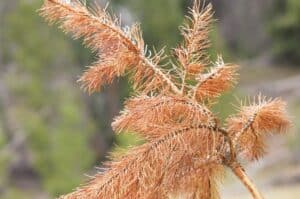
The stakes are high with conifers. Once bark beetles tunnel into the layer just beneath the bark, they cut off the tree’s water and nutrients from the inside, which is exactly how they kill the trees so quickly. As that supply is choked off, the needles fade from green to yellow and then to orange or reddish-brown – and that fading crown is often what a homeowner notices first from across the yard.
Why Does Early Detection Decide Whether a Tree Survives?
Early detection often determines whether a tree can be saved because both of these pests do their worst damage out of sight. Bronze birch borer and bark beetle larvae can feed beneath the bark for months before the canopy shows obvious symptoms. By the time you notice thinning foliage, dieback, or pitch tubes, the infestation may already be well established.
The longer the insects feed unnoticed, the more damage they cause to the tissues that move water and nutrients throughout the tree. That limits how effective treatment can be and, in severe cases, leaves removal as the only practical option.
If you notice signs of an infestation on one birch or pine, inspect nearby trees of the same species as well. Both pests can spread locally, and identifying problems early gives you the best chance of protecting the rest of your landscape.

From trunk-diameter measurements to targeted trunk injections, Seattle Tree Care’s ISA Certified Arborists pair hands-on inspection with preventive treatment to protect vulnerable trees before infestations take hold.
How Does a Plant Health Care Program Prevent Pest Damage?
A Plant Health Care (PHC) program prevents pest damage by catching stress and early pest activity long before a homeowner would ever notice it. Rather than reacting once dieback or pitch tubes appear, it puts your trees on a recurring schedule that shifts the timeline in your favor:
- Regular Inspections : Trained eyes catch early stress and pest signs a homeowner would miss.
- Preventive Treatments : Protection goes on before an infestation takes hold rather than after.
- Watering and Soil Care: Keeping trees vigorous helps them fend off pests in the first place.
For the mature specimen birches and conifers on Woodinville and Redmond properties, a year-round Plant Health Care program is what keeps a costly, hard-to-replace tree from becoming a removal job.
Frequently Asked Questions About Summer Pests on Birch & Pine Trees
How much does treatment for bronze birch borer or bark beetles typically cost?
Cost depends on tree size, infestation severity, and treatment method, so it varies from property to property. An ISA Certified Arborist can give you an exact quote after an on-site assessment.
Are some birch or pine species more resistant to these pests?
Yes. Some birch varieties tolerate bronze birch borer better than others, and pine species vary in how susceptible they are to bark beetles. An arborist can point you toward more resistant birch and pine species if you’re weighing your options for the site.
Can I treat bronze birch borer or bark beetles myself?
Store-bought treatments rarely reach the pest once it’s under the bark, and a misapplied treatment can waste time you don’t have. Professional systemic treatments and precise timing give a tree its best chance.
How often should my trees be inspected to catch problems like these early?
An annual inspection is the standard recommendation, ideally in early spring before pest activity ramps up for the season. That’s the schedule our Plant Health Care program follows.

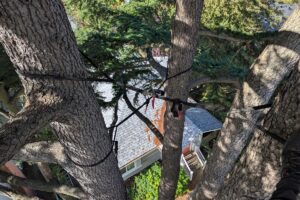
A Seattle Tree Care Plant Health Care technician documents trunk and canopy conditions during a routine inspection — the kind of scheduled check that catches pest and drought stress before symptoms are visible.
Protect Your Trees with an Expert Assessment from STC
Pest season doesn’t wait, and neither should a tree that’s showing signs of trouble. Whether it’s a birch fading from the crown down or a pine pushing out sap and sawdust, those early warning signs are what decide a tree’s chance of survival.
If you’re seeing those signs in Woodinville, Redmond, or the surrounding area, an arborist assessment from one of STC’s ISA Certified Arborists will tell you exactly what you’re up against, and enrolling in a Plant Health Care program keeps the next problem from getting a head start.
Call us at 206-222-0687 or request an estimate online to get started today.


SEE MORE ARTICLES FROM OUR b(LOG)
We've got you covered with tips, resources, updates, how-to's, and other helpful information about trees and landscapes in Seattle, Puget Sound, and King County, WA. Join the thousands of smart local residents who get the monthly newsletter from Seattle Tree Care for helpful information you won't want to miss!
There's no spam - we promise! We are committed to keeping your e-mail address confidential. We do not sell, rent, or lease our contact data or lists to third parties.