

When a 63-Inch Bigleaf Maple Failed in a Bellevue Critical Area

A massive 63.4-inch Bigleaf Maple exhibited significant structural deterioration and cracking (left); nearby willows showed signs of instability, including lean and root-plate movement toward the roadway (right).
PROJECT OVERVIEW
What began as a tree-risk and permitting project at a Bellevue residential community quickly became an emergency. Seattle Tree Care arborist Steve Clary evaluated a massive 63.4-inch Bigleaf Maple and two willows located near a community trail and an environmentally sensitive area. The maple was exhibiting serious structural concerns, including cracking; the willows were also showing signs of instability, including lean and root-plate movement toward the roadway.
Because the trees were located within or near a wetland/critical-area buffer, removal required considerably more regulatory documentation than a conventional tree-removal project, and Seattle Tree Care was preparing the necessary permitting when winter conditions accelerated the situation. During a snow event, the maple split and the willow failure progressed, with a willow falling toward the roadway. The project was no longer simply about planning for hazardous-tree removal; the team now had to respond to failed trees while simultaneously navigating the environmental requirements governing work within a protected area.

Winter conditions accelerated the situation before the original permitting process was complete. The compromised maple failed and a willow came down toward the roadway, turning a planned hazardous-tree project into an emergency response.
THE CHALLENGE
There were really two problems happening simultaneously. The first was arboricultural: a 63.4-inch Bigleaf Maple had developed significant structural defects while the nearby willows showed signs of instability; after the snow event, those concerns became actual failures.
The second problem was regulatory. The trees were associated with a Bellevue critical area and wetland buffer, meaning the project could not be approached like an ordinary removal and cleanup. City correspondence specifically required hazardous trees within the critical area/buffer to be supported by professional tree-risk documentation, and identified additional requirements involving permitting, replacement trees, and management of vegetation and debris. The team needed to solve the immediate tree problem without creating a second problem for the property through improper work within the protected area.

Willow and fir adjacent to the wetland buffer, annotated to show the failure and canopy condition assessed onsite.
OUR APPROACH
Navigating Bellevue’s critical-area requirements meant Seattle Tree Care’s role extended well beyond cutting trees. The project required the team to understand the applicable City of Bellevue tree and critical-area requirements, prepare the appropriate permit applications, and produce supporting environmental documentation describing how the work would be performed, including SEPA review considerations, erosion and sediment/soil protection, anticipated impacts within the critical area, methods for minimizing disturbance, tree-replacement requirements, and how woody debris would be handled within the protected area. Permits included a Land Use Exemption and the applicable nonresidential clearing/grading and landscape/vegetation permitting for the property.
When Steve initially evaluated the trees, warning signs were already developing: the maple was actively cracking, while the willow showed increasing lean and root-plate movement toward the road. Then the snow arrived: before the originally anticipated permitting process could play out, the maple experienced major structural failure and the willow failed into the roadway. The project transitioned into an emergency hazardous-tree response, while Seattle Tree Care continued working through the City’s regulatory process so the completed work could be appropriately documented and permitted.
Seattle Tree Care mobilized an arborist crew to address the failed and hazardous trees while working within the constraints of the wetland buffer, removing the 63.4-inch Bigleaf Maple as well as the affected willows. Because the work occurred adjacent to an environmentally sensitive area, debris management was an important part of the operation; tree material had to be managed within the locations permitted for the project, with the crew taking care to minimize disturbance to the wetland buffer, surrounding vegetation, soils, and community trail. While evaluating the property, the arborist also identified an additional dead fir separate from the original failures. Rather than waiting for the existing City process to finish and forcing an entirely new permitting process later, Seattle Tree Care proactively raised the additional tree while the existing permits were still under review, and the team was able to amend the permitting package to include it, potentially saving the client the cost, documentation, and delay of a second standalone permitting process.
THE RESULT & WHY THIS PROJECT MATTERS
For properties containing wetlands, streams, or other designated critical areas, hazardous-tree work can involve substantially more than determining whether a tree should be removed. The arborist needs to understand the tree; the crew needs to understand how to execute the work with minimal site disturbance; and someone needs to understand how those recommendations interact with municipal code, environmental documentation, permitting, and restoration requirements. This Bellevue project required all three; the value delivered wasn’t just tree removal, it was managing the entire problem.
Project Facts
LOCATION
Bellevue, WA
CLIENT
Village on Main / Agynbyte
PROJECT DATE
March 2026
TREE SPECIES
1 Bigleaf Maple (Acer macrophyllum), 63.4″ DSH; 2 Willow (Salix spp.), approx. 15″ DSH; additional dead fir identified during the project
PROJECT ARBORIST
Steve Clary
CREW
Arborist Climber, Apprentice Climber, Grounds Crew
EQUIPMENT
75′ bucket truck, wood truck, tree-removal equipment
REGULATORY ENVIRONMENT
City of Bellevue Critical Area / wetland buffer
PERMITTING
Land Use Exemption; Non-Residential Clearing & Grading / Landscape & Vegetation permitting; SEPA and erosion/soil-impact documentation
PROJECT VALUE
$10,809.40 total
By the Numbers
63.4"
Bigleaf Maple DSH
3+
Permit types coordinated with the City of Bellevue
1
Additional dead fir proactively added to the permit package
Related Case Studies

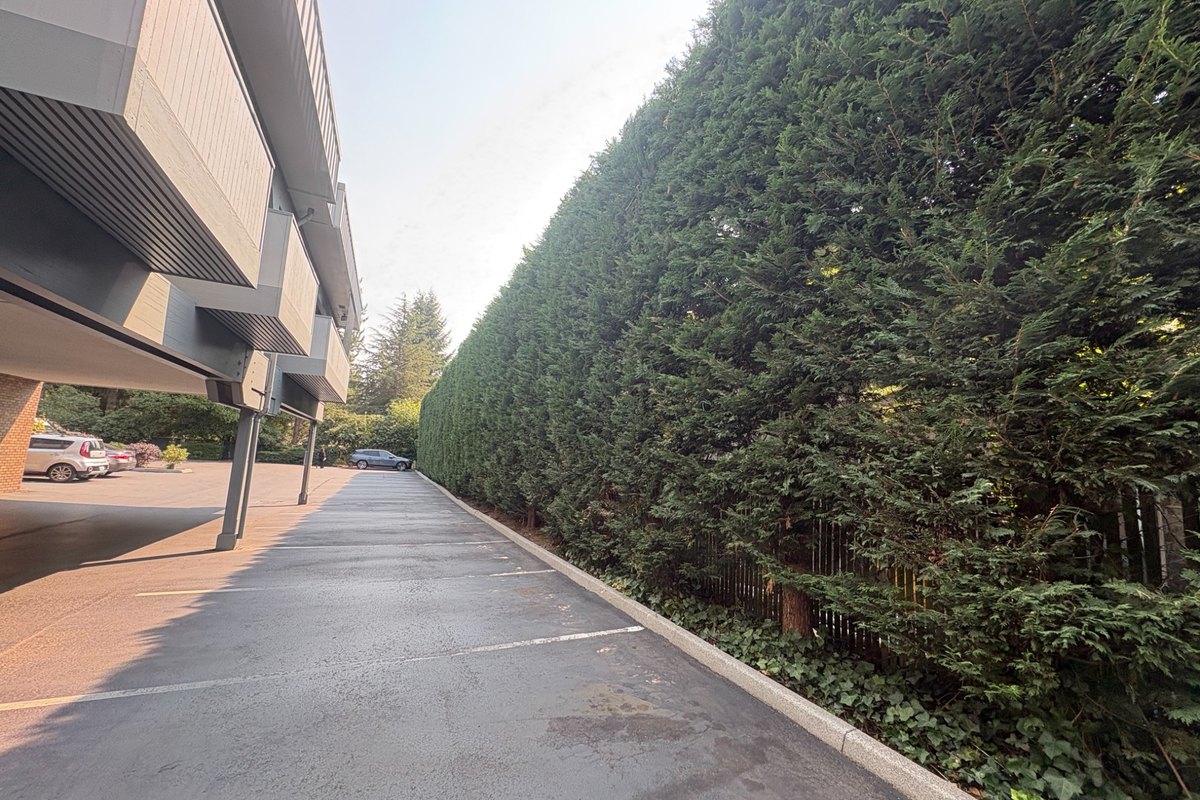
Restoring an Overgrown Leyland Cypress Privacy Hedge in Bellevue
Seattle Tree Care | October 1, 2026
See how Seattle Tree Care reduced and reshaped an overgrown Leyland cypress hedge in Bellevue while preserving the dense privacy screening it provided.

Pruning Mature Cedars for Deadwood and Property-Line Clearance in Queen Anne
Seattle Tree Care | October 1, 2026
See how targeted pruning removed deadwood from two mature Queen Anne cedars while creating needed clearance along the neighboring property line.
-
View Pruning to Meet HOA Requirements in Shoreline, WA
Seattle Tree Care | October 1, 2026
A Shoreline homeowner needed lower tree heights to meet HOA requirements and maintain their view. See how Seattle Tree Care reduced the canopy without topping.


We've got you covered with tips, resources, updates, how-to's, and other helpful information about trees and landscapes in Seattle, Puget Sound, and King County, WA. Join the thousands of smart local residents who get the monthly newsletter from Seattle Tree Care for helpful information you won't want to miss!
There's no spam - we promise! We are committed to keeping your e-mail address confidential. We do not sell, rent, or lease our contact data or lists to third parties.