

Creating an Osprey Nest in a 100-Foot Douglas Fir in Renton

A mature Douglas-fir at Petrovitsky Park was selected for conversion into an elevated osprey nesting site. Red markers show the retained-branch framework planned for the nest foundation.
PROJECT OVERVIEW
Seattle Tree Care took part in an unusual habitat-creation project at Petrovitsky Park in Renton, where a mature Douglas-fir was intentionally modified to create a purpose-built nesting structure for osprey. Rather than removing the tree, an arborist climbed into the canopy, removed the central leader and several adjacent branches, and transformed the remaining upper structure into the foundation for an elevated nest.
The work combined technical climbing arboriculture, wildlife biology, and habitat conservation. Seattle Tree Care worked from a predefined osprey habitat plan and coordinated directly with a biologist throughout construction of the nest.
THE CHALLENGE
Tree topping is generally considered an improper pruning practice: indiscriminately removing a tree’s upper crown can cause serious structural and biological problems. This project was fundamentally different: the objective was not conventional pruning but a specialized wildlife-habitat modification, deliberately reshaping the Douglas-fir to create an elevated nesting platform for osprey, large native raptors that typically build substantial platform nests high above the ground.
That required the arborist to work high in a mature Douglas-fir while making very specific structural cuts, removing enough of the upper tree to establish the nesting site while retaining carefully selected branch stubs capable of supporting the constructed nest foundation.
OUR APPROACH
The project began with controlled removal of the Douglas-fir’s central leader and three to four adjacent branches, according to the predetermined habitat plan. Rather than cutting the remaining branches flush, selected branch stubs were intentionally retained around the former central leader to form the structural framework for the artificial nest. A preconstructed cedar nest ring was then positioned within the retained branch structure and secured with galvanized wire.
Native nesting material was arranged over the cedar framework: larger-diameter sticks forming the outer portion of the nest, with progressively smaller material filling the interior, and finer material and bark were placed over the foundation to create a concave nesting surface suited to future osprey nestlings.
One of the strongest aspects of the project was the collaboration between disciplines: the Seattle Tree Care arborist handled the technical climbing and tree modification while a biologist provided guidance from the ground via two-way radio, using a telescopic boom lift to transfer nesting materials once the cedar support ring was secured. Arboricultural expertise determined how the work could be performed safely within the tree; biological expertise guided how the finished structure needed to function as wildlife habitat.

The modified Douglas-fir now supports a purpose-built osprey nesting platform, constructed from a secured cedar framework and natural nesting material.
THE RESULT
The Douglas-fir was transformed into a specialized osprey nesting structure rather than being removed. Its upper leader was selectively modified, an engineered cedar nest foundation was secured within the retained branch structure, and natural nesting materials were arranged to create the finished platform, an uncommon intersection between professional arboriculture and wildlife conservation.
WHY THIS PROJECT MATTERS
Professional arboriculture isn’t always about deciding whether a tree should be pruned, treated, or removed; sometimes the tree itself becomes part of a broader ecological solution. This project also draws an important distinction between indiscriminate tree topping and specialized habitat modification: similar-looking cuts can serve completely different purposes depending on the objective, planning, and expertise behind them. Here, modification of the Douglas-fir was deliberate, technically planned, and performed specifically to create a functional nesting structure for wildlife.
Project Facts
LOCATION
Petrovitsky Park, Renton, WA
CLIENT
FORMA Construction Company / public park project
TREE SPECIES
Douglas-fir (Pseudotsuga menziesii)
SERVICE
Wildlife habitat creation / specialized arboriculture
CREW
Climbing arborist + onsite support, coordinated with a biologist
EQUIPMENT
Climbing & rigging equipment; chipper truck & wood chipper; biologist-supported telescopic boom lift
PROJECT DURATION
Approx. 6 hrs planned; 6.32 recorded man-hours
PROJECT VALUE
$3,690
COMPLETED
2025
By the Numbers
100 FT
Approx. tree height modified
6.32
Recorded man-hours
3
ANSI-guided cedar nest ring secured to retained leaders
WATCH THE PROJECT VIDEO
Tree Topping for Wildlife - Arborist Builds Osprey Nest in 100 Foot Tall Douglas Fir
Related Case Studies

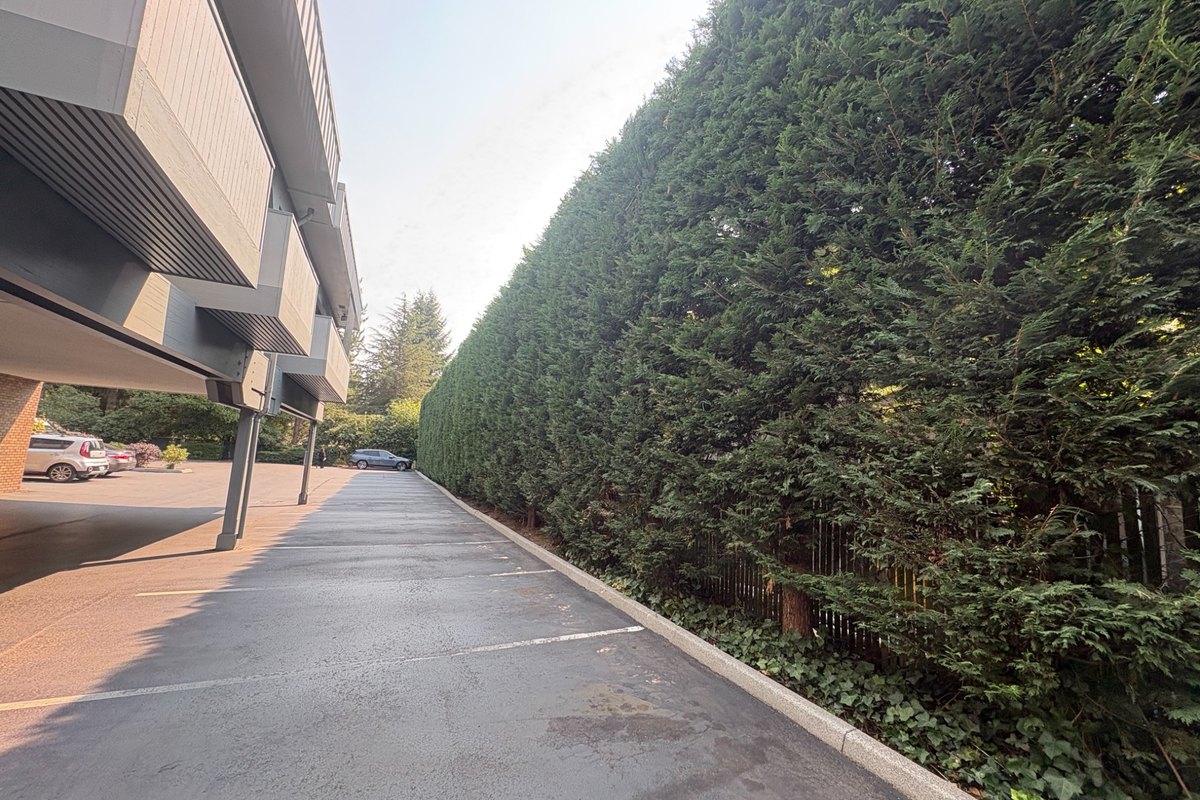
Restoring an Overgrown Leyland Cypress Privacy Hedge in Bellevue
Seattle Tree Care | October 1, 2026
See how Seattle Tree Care reduced and reshaped an overgrown Leyland cypress hedge in Bellevue while preserving the dense privacy screening it provided.

Pruning Mature Cedars for Deadwood and Property-Line Clearance in Queen Anne
Seattle Tree Care | October 1, 2026
See how targeted pruning removed deadwood from two mature Queen Anne cedars while creating needed clearance along the neighboring property line.
-
View Pruning to Meet HOA Requirements in Shoreline, WA
Seattle Tree Care | October 1, 2026
A Shoreline homeowner needed lower tree heights to meet HOA requirements and maintain their view. See how Seattle Tree Care reduced the canopy without topping.


We've got you covered with tips, resources, updates, how-to's, and other helpful information about trees and landscapes in Seattle, Puget Sound, and King County, WA. Join the thousands of smart local residents who get the monthly newsletter from Seattle Tree Care for helpful information you won't want to miss!
There's no spam - we promise! We are committed to keeping your e-mail address confidential. We do not sell, rent, or lease our contact data or lists to third parties.